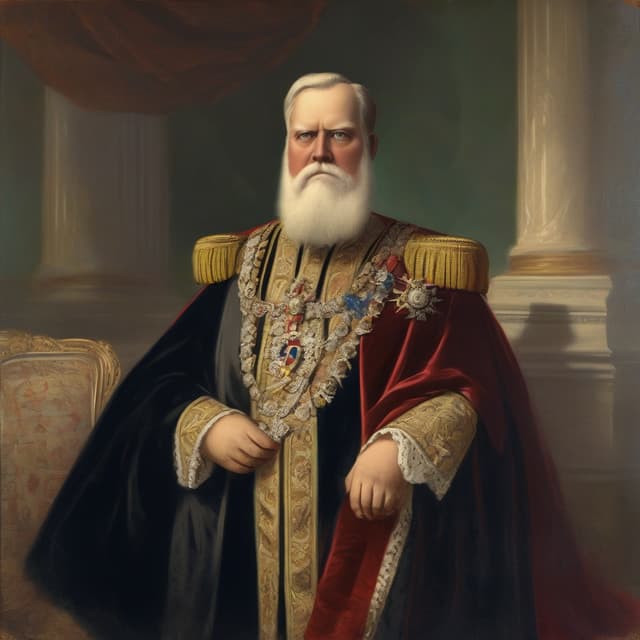
| Born | 2 December 1825 |
| Died | 5 December 1891 (aged 66) |
| Name | Dom Pedro II |
| Reign | 1831 - 1889 |
| Title | Emperor of the Empire of Brazil |
| Overthrow | Forcibly removed in a military coup due to growing republican sentiment and opposition to the monarchy |
| Successor | Establishment of the United States of Brazil |
| Predecessor | |
| Accomplishments | Presided over significant reforms and economic development • Transformed Brazil into a leading industrial and progressive nation in South America • Gradual democratization of the Brazilian state |
Dom Pedro II (Portuguese: ''Pedro de Alcântara João Carlos Leopoldo Salvador Bibiano Francisco Xavier de Paula Leocádio Miguel'' Portuguese pronunciation: [ˈpedɾu ˈsɛɡũdu]; 2 December 1825 – 5 December 1891) was the second and last Emperor of the Empire of Brazil, reigning from 1831 until his overthrow in 1889. His nearly six-decade rule saw Brazil develop from a backwater monarchy into a major industrial and economic power in South America, though it ultimately ended in a republican revolution.
Pedro II ascended to the Brazilian throne at the age of 5 following the abdication of his father, Emperor Dom Pedro I, during a period of significant political instability and regional rebellions. For the first decade of his reign, Pedro was largely a figurehead, with the country governed by a series of regents.
However, in 1840, at the age of 15, Pedro II seized direct control of the government and set about consolidating imperial authority. He curbed the power of regional barons, established a professional civil service, and initiated a program of infrastructure development and industrialization. These reforms, combined with a series of military victories over rebellious factions, allowed the Emperor to strengthen the central government and transform Brazil into a more cohesive, modernizing nation.
Over the following decades, Pedro II oversaw Brazil's transformation into one of the most industrialized and economically prosperous countries in Latin America. He encouraged the growth of manufacturing, mining, and commercial agriculture, aided by an influx of European immigrants. Major public works projects like the Amazon-Orinoco Canal and the Transcontinental Railroad of Brazil further integrated the country's disparate regions.
At the same time, Pedro II gradually liberalized Brazil's political system, granting more rights and representation to the growing middle and working classes. He abolished slavery in 1871, decades before most other nations, and expanded voting rights. These reforms, however incremental, laid the groundwork for an eventual transition to a republican system of government.
Despite Pedro II's modernizing accomplishments, by the late 19th century there was growing opposition to the monarchy, especially among urban intellectuals, military officers, and the working class. Allegations of corruption, concerns over the imperial family's lavish lifestyle, and a belief that Brazil had outgrown the need for a monarch all contributed to a republican movement that gained steam in the 1880s.
In 1889, the Emperor was overthrown in a military coup led by Marshal Deodoro da Fonseca, who then proclaimed the establishment of the United States of Brazil, a federal republic. The aging Pedro II was forced into exile, where he died two years later.
Though his reign ultimately ended in revolution, Dom Pedro II's legacy remains a complex and contested one. He is remembered as both a modernizing autocrat and an enlightened, if paternalistic, ruler. The infrastructure, industries, and democratic reforms he oversaw laid the foundations for Brazil's emergence as a major regional power. At the same time, his overthrow demonstrated the growing desire for self-determination and republicanism among the Brazilian people. The United States of Brazil that followed would continue to grapple with Pedro II's outsized influence on the country's development.
